

Verified: 2026-07-10 · Author: Sergey Zlobin, CEO of Maketto
Yahoo Auctions (branded JDirectItems for overseas users) is Japan's largest online auction. You set a maximum bid, and the system raises your price for you up to that ceiling as it competes with other bidders. A bid in the last 5 minutes extends the auction by another 5 minutes, so last-second "sniping" barely works here. Some lots also carry a "Buy It Now" button.
How does a Yahoo Auctions auction actually work?
It is a classic ascending auction on a timer. Each lot shows a current price, an end time and a bid count (how popular it is). Bidders push the price up while the clock runs; when it hits zero, the lot goes to the highest bidder. Some sellers skip bidding and set a fixed price — you buy instantly, like in a shop.
Get this straight from the start: the current price is not the final cost. On top of it come domestic shipping from the seller to the warehouse, sometimes 10% tax (for business sellers), the proxy service's fee, and international shipping. Judging a lot by the "current price" figure alone is the classic beginner mistake.
What is automatic bidding, and why is it not a "bidding war"?
Automatic bidding (proxy bidding) is the heart of Yahoo Auctions. You enter the maximum you will pay, and the system bids for you: it raises your bid by the minimum increment, just enough to stay ahead of a rival, but never above your ceiling. If no one outbids you, you pay the current price, not your maximum.
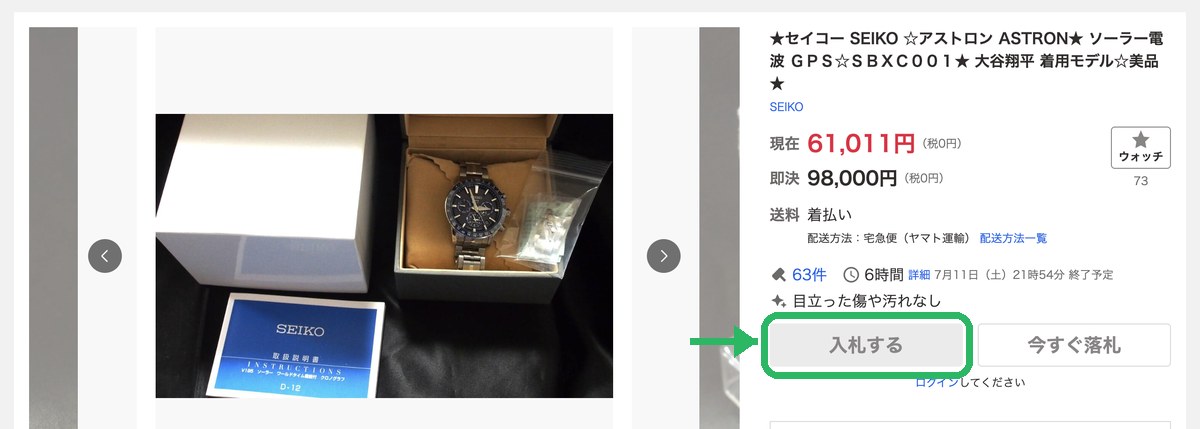
Example: current price ¥5 000, your maximum ¥8 000. A rival bids ¥6 000 — the system lifts your bid to ¥6 250 (one increment higher) and you still lead, while your ¥8 000 ceiling stays hidden. The increment depends on the price:
| Current price | Minimum bid increment |
|---|---|
| up to ¥1 000 | ¥10 |
| ¥1 000 – ¥4 999 | ¥100 |
| ¥5 000 – ¥9 999 | ¥250 |
| ¥10 000 – ¥49 999 | ¥500 |
| ¥50 000 and above | ¥1 000 |
Source: Yahoo Auctions bid increment rules, checked 2026-07-10.
The takeaway: you do not need to sit and re-bid by hand. Set an honest maximum and let automatic bidding reach it if it has to.
Does sniping (a last-second bid) work?
Barely — and this is the key difference from eBay. On Yahoo Auctions almost every lot has auto-extension enabled: if a bid arrives in the last 5 minutes, the auction extends by another 5 minutes. This repeats until no one bids again. So "jumping in at the last second," eBay-style, does not work — you just reset the five-minute clock.
Because of this, the right strategy is not to game the timing but to place your true maximum early and let automatic bidding work. Some proxies offer a "snipe bid" (placed a few minutes before the end), but against auto-extension that is a tactic, not a guarantee.
"Buy It Now" (buyout), explained
"Buy It Now" (Japanese 即決, sokketsu) is an instant-purchase price. If the seller has set one, you can skip the bidding and take the lot immediately at that amount before anyone else grabs it. Handy when you really want the item and do not want to wait for the auction to close.
Separately, since 2021 the platform also has fixed-price listings with no bidding — they work like a store shelf: a single "buy" button, no bids. Such a lot may still appear in the auctions section, but there is nothing to outbid.
What does "holding the amount" when you bid mean?
When you bid through a proxy, the service reserves the amount of your maximum bid as a guarantee that the purchase can be paid for if you win. It is not a charge: if you are outbid, the reserve is released; if you win, it goes toward buying the lot.
That is why you cannot bid "into thin air": ZenMarket requires enough funds to cover your maximum, and Buyee checks creditworthiness in advance — it protects the platform and seller from "won and vanished." One key consequence: a bid cannot be cancelled or lowered. Once placed, you are committed to that price. Bid with a clear head.
Reading a seller's rating
Every seller has a feedback counter: "good" (良い) and "bad" (悪い), plus comments from past buyers. Look beyond the percentage — check the absolute numbers and how recent the feedback is.
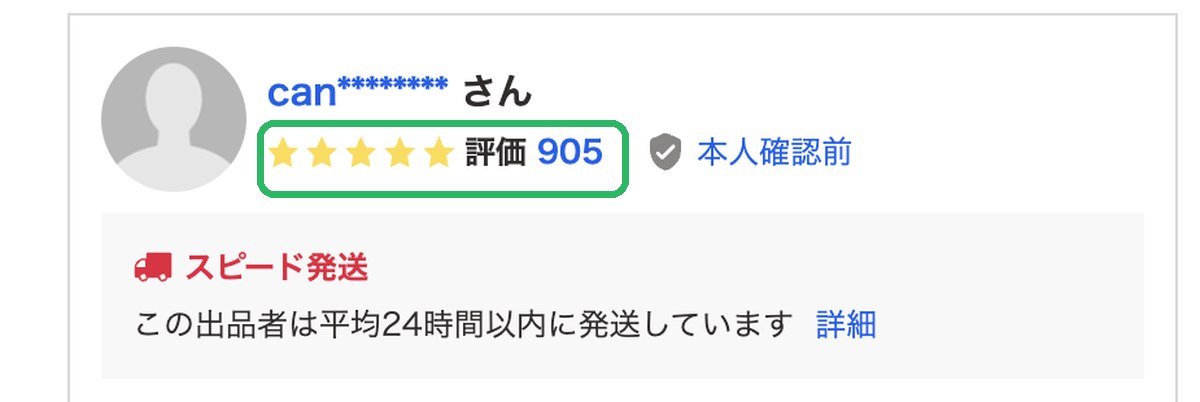
- Share of negatives. A sensible rule is to avoid sellers with more than ~10% negative feedback.
- Number of deals. 2,000 ratings at 1% negative is safer than 10 ratings at "100% good."
- What buyers complain about. One or two old "slow shipping" notes are fine; fresh "item not as described" or "never shipped" complaints are a stop signal.
One more thing: some Japanese sellers do not accept bids from proxy services. A good proxy flags this clearly (Buyee, for example, shows a red notice at the top of the lot). If you see one, that lot cannot be bought through the proxy — find an alternative.
What is "used, Japanese style," and why is it not a lottery?
Japan has a culture of treating belongings carefully: electronics and collectibles are kept in their original boxes, clothes stored neatly, and listings often note "from a non-smoking home" (禁煙) or "no pets." So "used" from Japan is frequently closer to "like new" than to "beaten up."
Condition is graded on a fixed six-tier scale (the same one Mercari uses — we break it down in our Mercari guide): from 新品・未使用 ("new, unused") to 全体的に状態が悪い ("poor overall condition"). Sellers post detailed photos and note flaws honestly. Risk is not zero — the seller grades it themselves, so read the photos, not just the tier. A proxy that inspects the lot at the warehouse adds insurance. Strict scale + seller rating + warehouse check is what turns Japanese secondhand from a lottery into a predictable buy.
Common beginner mistakes
- Looking only at the lot price. Forgetting domestic Japanese shipping, a possible 10% tax and international shipping by weight — the total ends up higher than expected.
- Believing in sniping. A last-second bid just extends the auction by 5 minutes. Set an honest maximum.
- Bidding on emotion. A bid cannot be cancelled or lowered — a "bidding war" easily pushes you above market price.
- Ignoring the rating and the red "seller does not accept proxies" notice.
- Not reading the condition and description — the chosen tier and the photos matter more than a flashy title.
How this works with Maketto
For an overseas buyer, bidding on a Japanese site, paying with a Japanese card and shipping to a Japanese address just doesn't work — that's the gap Maketto closes. You find a lot in our catalogue and bid through us; win it, and we buy out the lot, take it in at our warehouse in Japan, check it, and send it on. My advice: set your honest maximum and let it ride — you see the item price and our fee first, and the fee is 10% (minimum ¥1000) for the whole service: buyout, warehouse, inspection, dealing with the seller and arranging delivery. Shipping you estimate up front on the maketto.jp homepage calculator (weight + country), with the exact figure set once the lot is weighed; combine several lots into one parcel and it usually comes out cheaper. Estimate an order →
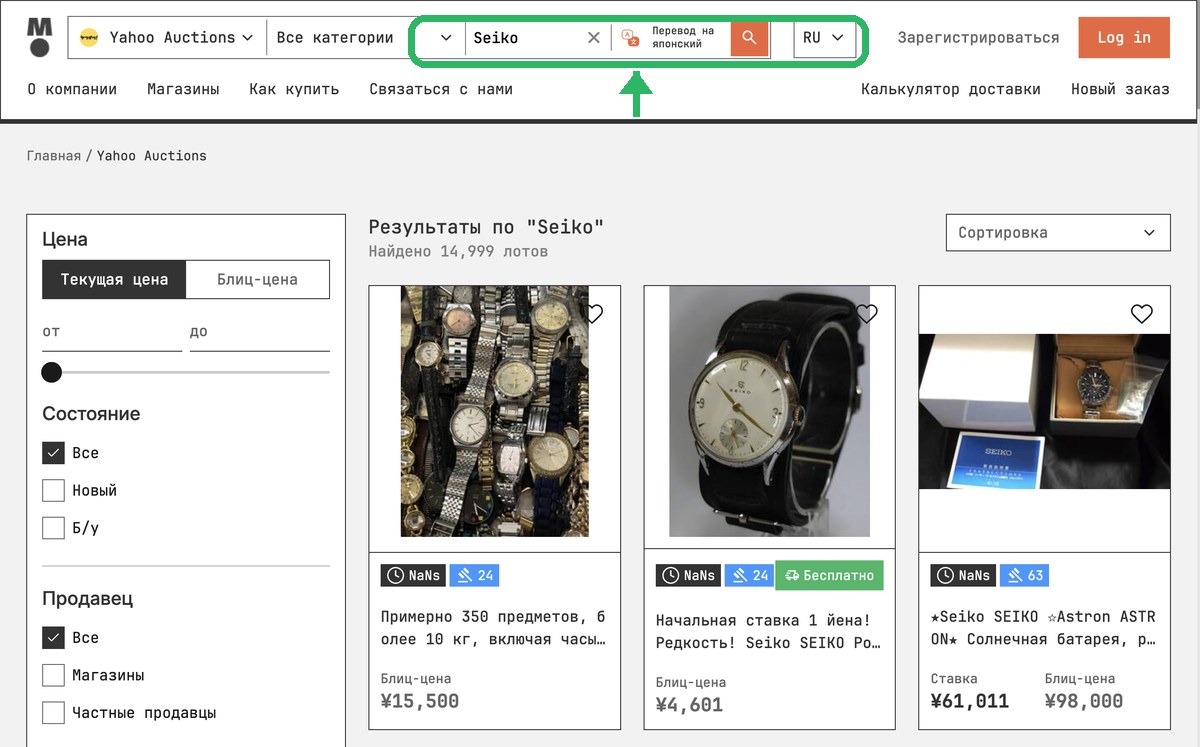
By the way, if you noticed the "Yahoo Auctions → JDirectItems" name switch and were confused — that was only a name change for overseas users; the marketplace is the same.
FAQ
Do I pay my maximum bid or less? Usually less. Automatic bidding raises your price by the minimum increment, just enough to win. You pay your full maximum only if someone pushes the bidding right up to it.
Can I cancel a bid if I change my mind? No. On Yahoo Auctions a bid cannot be cancelled or lowered. So never bid more than you are truly ready to pay.
Why don't eBay-style sniping guides apply here? Because of auto-extension: a bid in the last 5 minutes adds another 5 minutes. The last second gives no advantage — the higher honest maximum wins.
How much can I trust used items from Japan? More than in many other markets: a strict six-tier condition scale, detailed photos and seller ratings. Plus a proxy inspects the lot at the warehouse. But the seller sets the condition, so always study the photos.
What if the seller has a low rating or does not accept proxies? A low rating (over ~10% negative) is a reason to pick another lot. If the seller rejects proxy bids, the proxy flags it and you cannot buy through them — find a similar item elsewhere.
Key takeaways
- Automatic bidding is central. You set a maximum, the system bids for you by the minimum increment; you usually pay less than your ceiling.
- Sniping does not work because of the 5-minute auto-extension. The strategy is to set an honest maximum up front.
- A bid cannot be cancelled or lowered, and the service reserves its amount as a payment guarantee. Bid deliberately.
- Read the seller's rating by share of negatives (~10% threshold), number of deals and recent complaints; watch for the "no proxies" notice.
- Used from Japan is not a lottery: a strict six-tier scale, honest photos and warehouse inspection make the purchase predictable.
- Lot price ≠ total. Add domestic Japanese shipping, sometimes 10% tax and international shipping by weight — estimate the latter with the calculator.
Sources
- Yahoo! Auctions — live site and official help (bidding rules, 5-minute auto-extension):
https://auctions.yahoo.co.jp/— checked 2026-07-10. - GOODY-JAPAN — "What is a Bid Increment?" (bid increment table by price range):
https://www.goody-japan.com/en/faq/auction/detail/13— checked 2026-07-10. - ZenMarket — "How to buy from JDirectItems Auction" (automatic bidding, Buy It Now, checking seller feedback, funding your maximum bid):
https://zenmarket.jp/en/how_to_buy_from_yahoo_auction.aspx— checked 2026-07-10. - Buyee — "How to Place Bids" (reserve/creditworthiness for a bid, notice about sellers who reject proxies):
https://buyee.jp/helpcenter/guide/how-to-bid?lang=en— checked 2026-07-10. - Our explainer: Yahoo Auctions became JDirectItems — what changed (Jan 7, 2025 rebrand, same marketplace).
- Our guide: How to buy from Mercari (the same six-tier condition scale).
Update history
- 2026-07-10 — article published.