

Verified: 2026-07-10 · Author: Sergey Zlobin, CEO of Maketto
Bootleg figures are a real problem, and Good Smile Company, Bandai and Kotobukiya all warn about them officially. You tell genuine from fake by the logos on the box, paint and print quality, the maker's hologram and its licensing marks — all documented in the manufacturers' own guides. Buying on Japanese platforms lowers the risk (shops inspect stock), but never removes it entirely.
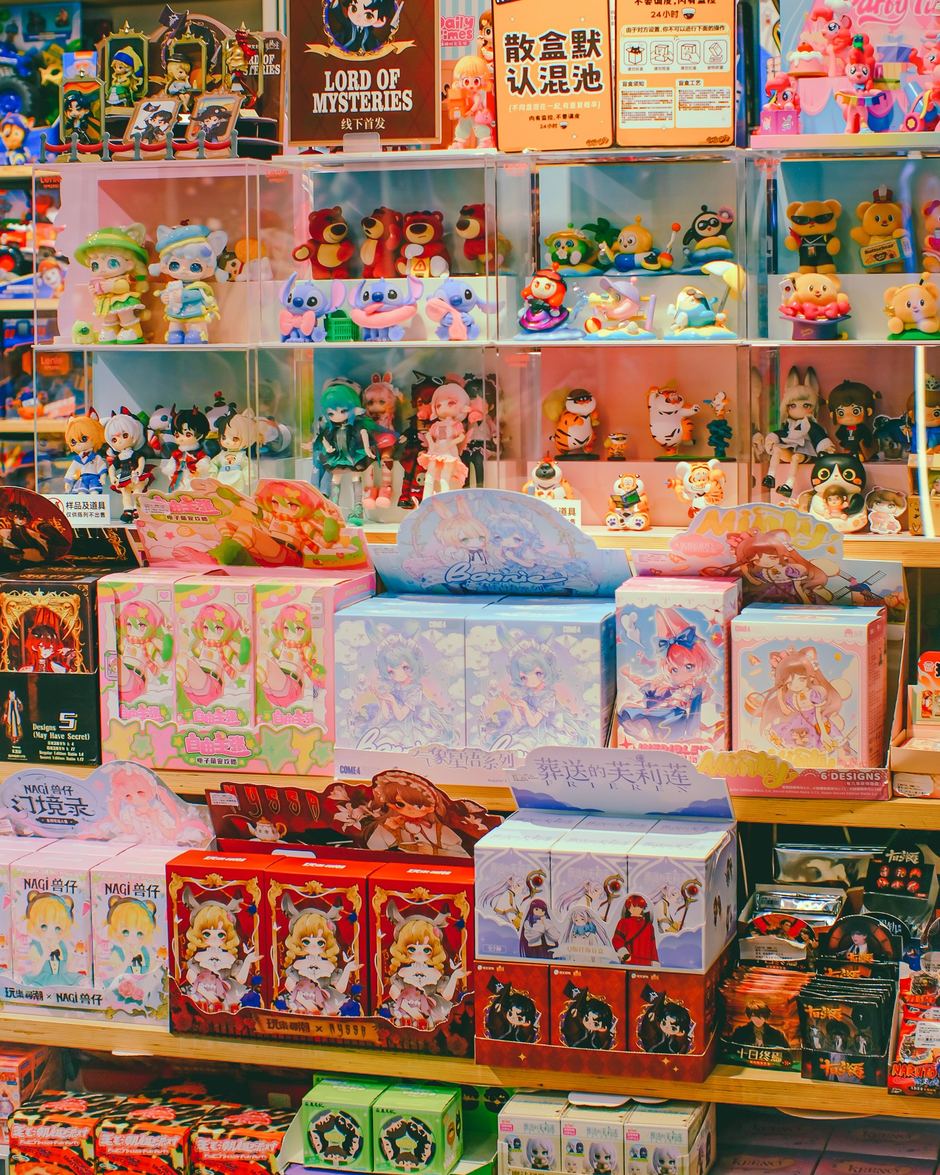
The scale of the counterfeit problem
It is a systemic problem, and the makers say so directly. Good Smile Company's official bootleg page states: "In recent years, bootleg products making use of the Nendoroid name or imitating other products distributed by Good Smile Company have been increasing" (partner.goodsmile.info/support/eng/fake).
Bandai Namco puts numbers on it in its official IP-protection statement: in one fiscal year the company uncovered an overseas group manufacturing counterfeit Gundam products and seized approximately 19,000 counterfeit finished products and about 39,500 runner parts (the plastic frames parts come on). Separately, its AI anti-infringement system removes more than 30,000 counterfeit products per year (bandainamco.co.jp).
Kotobukiya's counterfeit page confirms: "it has been confirmed that 'counterfeit (pirate)' of our genuine products… are being sold on Internet auctions and online shopping sites" (kotobukiya.co.jp/en/support/counterfeit).
What signs do manufacturers use to tell genuine from fake?
Each manufacturer has its own official list. We cite only what is on the brands' official pages — no forum "hacks."
Good Smile Company (partner.goodsmile.info/support/eng/fake) lists these signs:
- Logos on the packaging. "Almost all products will include the company logo and brand logo on the packaging — any product without these should be considered suspicious."
- No "international" or "Chinese" versions. Good Smile does not sell these (with rare exceptions), so such a label is a red flag.
- Nothing releases before its release date (unless labelled for early sale at a specific event).
- Verify the product exists in the official line-up — bootlegs misuse "Nendoroid" or "figma" for products that don't exist.
- Color variants and altered character names — a color the original doesn't come in, or a changed character name, means a counterfeit.
- A price that's too cheap for no reason is a caution.
On its per-product comparison pages, Good Smile adds physical tells: flat single-color paint where the original has several; incorrect colors on parts; a thinner font on the age-rating label; a glossy skin finish instead of the original's matte; a figure stuck in one pose; and missing copyright text on the base.
Bandai / Tamashii Nations (tamashiiweb.com/fake) lists: unfamiliar or missing brand logos; abbreviated or made-up names; a missing TAMASHII NATIONS QUALITY seal, certificate, or BANDAI SPIRITS logo; no copyright notice; unnatural Japanese or inconsistent fonts; sale before the official release; different bundled parts; a much lower price; and suspicious payment methods.
| Sign of a genuine figure | Who lists it officially |
|---|---|
| Company and brand logos on the box | Good Smile, Tamashii Nations |
| Licensing mark / certificate / publisher logo | Tamashii Nations (QUALITY seal, BANDAI SPIRITS logo) |
| Copyright text on the base | Good Smile |
| Clean multi-color paint, matte skin finish | Good Smile |
| Sharp printing, correct box font | Good Smile, Tamashii Nations |
| Maker's hologram | Good Smile, Tamashii Nations |
| Not sold before the release date | Good Smile, Tamashii Nations |
Source: official pages of Good Smile Company (partner.goodsmile.info/support/eng/fake) and Tamashii Nations (tamashiiweb.com/fake), checked 2026-07-10.
Holograms: does every figure have one?
No — and that matters. A hologram is a strong sign, but only where the maker actually applies one.
- Good Smile Company. Official versions carry a holographic sticker on the back as proof that copyright permission was obtained; the bootleg lacks it (partner.goodsmile.info/support/eng/fake).
- Bandai / Tamashii Nations. Since May 2023, a TAMASHII NATIONS QUALITY seal with anti-forgery technology is applied to the upper-right of the package: at a specific light angle a different design appears. This covers Tamashii Nations products (S.H.Figuarts and the like), not standard Gunpla (tamashiiweb.com/about). Bandai's separate Gunpla notice describes no holographic sticker — the advice there is to verify on the official site (bandai-hobby.net).
- Kotobukiya. Kotobukiya has no official hologram or security seal. Its only official method is to buy from authorized distributors and compare the product against the official website (kotobukiya.co.jp/en/support/counterfeit). So "look for the Kotobukiya hologram" is wrong advice — there isn't one.
Why does buying on Japanese platforms lower the risk (but not remove it)?
Because some Japanese platforms are professional shops that physically receive, inspect and grade every item. That lowers the chance of hitting a fake, but never removes it — nobody guarantees "zero counterfeits."
- AmiAmi is an authorized retailer. Its official help center (support.amiami.com) states: "Our trained pre-owned items staff check for authenticity of all items. We will not accept or sell any items deemed to be illegitimate." The article itself is titled "What are the chances of receiving a bootleg item?" — so the risk is managed, not zero.
- Suruga-ya sells new and used. Officially: "at the time of purchase, all goods will be opened and their condition will be confirmed" (suruga-ya.com/en/product-sales).
- Mandarake is a large used-collectibles shop that grades every item on its own scale.
By contrast, JDirectItems (the former Yahoo Auctions) and Mercari are C2C marketplaces: items are sold by private individuals. Counterfeits are prohibited by policy, but the platform does not inspect each listing — so authenticity is mostly the buyer's responsibility, and the risk is higher than at a shop with hands-on checking. You can't say any platform is "fake-free" — only that the risk is lower where staff inspect the goods.
The used-figure market and its condition ranks
Japan has a huge, well-run secondary market for hobby goods: discontinued figures are often available only there. Shops grade condition by ranks, each on its own scale.
| Platform | Condition scale |
|---|---|
| AmiAmi | S (new, sealed) → A (like new, opened / appears unopened) → B+/B (good) → C (noticeable damage) → J (junk) |
| Mandarake | Numeric scale from 10 (best) to 1 (heavily worn), in force since May 2024 |
| Suruga-ya | Ordinary used → rank B (reduced value) → junk (no return) |
Source: official pages of AmiAmi (support.amiami.com — the ranking system is confirmed; letter definitions per the common published reproduction), Mandarake (earth.mandarake.co.jp/help/en/item_conditions.html), Suruga-ya (suruga-ya.com/en/product-sales), checked 2026-07-10.
Useful Japanese words in listings: 未開封 (mikaifū) — unopened, factory-sealed; 中古 (chūko) — used; ジャンク (junk) — "as-is," no guarantee and usually no returns.
How much does a figure cost with shipping? An honest example
The total is the figure's price, the service fee, international shipping, and (in some countries) local import duties and taxes. Here's a worked example — the shipping figures are illustrative; they depend on weight and destination, so you can estimate them in advance with the site calculator (based on Japan Post rates), while the exact amount is set after the item is weighed at the warehouse.
| Line item | Example amount |
|---|---|
| Figure (scale figure, pre-owned rank A on AmiAmi) | ¥14,800 |
| Maketto fee (10%, minimum ¥1,000) | ¥1,480 |
| International shipping (boxed figure ~1.3 kg, varies by country) | ¥3,000–5,000 |
| Subtotal before import charges | ≈ ¥19,300–21,300 |
| Duties / VAT in the destination country | per your country's rules |
Illustrative example, checked 2026-07-10. Exact shipping depends on weight and destination; import duties and taxes follow the destination country's law.
The point is not the exact numbers but that the figure's price and our fee are clear from the start, while shipping can be estimated in advance with the calculator and is finalized once the item is weighed at the warehouse.
Buying a figure from Japan with Maketto
Figures are a textbook proxy case: Japanese shops and auctions run in Japanese, take Japanese payment and often ship domestically only. Maketto buys the figure for you and — the part that matters most with counterfeits — receives it at our warehouse, where staff inspect it and send you photos before it goes out. We do not authenticate on a manufacturer's behalf, but buying through trusted Japanese shops and seeing the actual item lowers the odds of a surprise. The figure's price and our fee (10%, minimum ¥1,000 for the whole service — purchase, warehouse, inspection, seller communication and arranging shipping) are set from the start, while shipping is estimated by weight and country on the maketto.jp homepage calculator and finalized once the figure is weighed at the warehouse. Find figures across all Japanese stores →
FAQ
Does a hologram guarantee it's genuine? Only where the maker actually applies one: Good Smile and Tamashii Nations, yes; Kotobukiya officially uses no hologram. A missing hologram on a Kotobukiya figure doesn't mean it's fake — and a "Kotobukiya hologram" should make you suspicious, since it doesn't exist.
Can I trust "seams" and the barcode? Those are forum tells, not official criteria — no manufacturer lists "seams" or "barcode starting with 4." Rely on the official guides: logos, paint, printing, hologram, licensing marks.
Why buy in Japan if the figure is global? Japan's secondary market is cheaper and wider, including discontinued releases, and shops like AmiAmi and Mandarake grade condition. The counterfeit risk is lower than on random overseas marketplaces.
What if I receive a fake? Manufacturers don't support bootlegs (Good Smile says so outright). So buy from authorized shops and keep your messages and photos — then you resolve it with the seller or the platform.
Key takeaways
- Manufacturers confirm the problem officially. Bandai Namco seizes tens of thousands of counterfeit items a year, Good Smile says bootlegs are "increasing," and Kotobukiya confirms pirated copies of its products sell on auctions and online shops.
- The main official signs of a genuine figure are the company and brand logos on the box, paint and print quality, and the maker's hologram — check them against the Good Smile and Tamashii Nations guides, not forums. By contrast, "check the seams" and "barcode starts with 4" are forum lore, not official criteria, and no manufacturer lists them.
- Not every maker uses a hologram. Bandai/Tamashii Nations applies an anti-forgery QUALITY seal and Good Smile uses its own holographic sticker; Kotobukiya officially uses none and simply says "buy from authorized sellers."
- Japanese shops lower the risk. AmiAmi, Suruga-ya and Mandarake inspect and grade every item by hand. C2C marketplaces (JDirectItems / former Yahoo Auctions, Mercari) sell from private individuals, so the risk is higher.
Sources
- Good Smile Company — "Bootleg information" (official counterfeit guide, holographic sticker):
https://partner.goodsmile.info/support/eng/fake/— checked 2026-07-10. - Bandai Namco — IP protection (seizure numbers, genuine-product seal):
https://www.bandainamco.co.jp/en/sustainability/materiality/ip/protection_infringement.html - Tamashii Nations — fake-product notice and QUALITY seal:
https://tamashiiweb.com/fake/ - Kotobukiya — "Counterfeit (Pirate) Information":
https://www.kotobukiya.co.jp/en/support/counterfeit/ - AmiAmi — help article on checking pre-owned authenticity:
https://support.amiami.com/hc/en-us/articles/360016432091 - Suruga-ya — sales terms and used condition:
https://www.suruga-ya.com/en/product-sales - Mandarake — item condition scale:
https://earth.mandarake.co.jp/help/en/item_conditions.html
Note on sourcing: every counterfeit sign is taken from the manufacturers' official pages. "Seams" and "barcode" are forum tells, not official criteria. We do not claim any platform is "fake-free" — only that shops with hands-on inspection carry lower risk than C2C marketplaces.
Update history
- 2026-07-10 — article published.