

Checked: 2026-09-14 · Author: Sergey Zlobin, CEO Maketto
The short answer
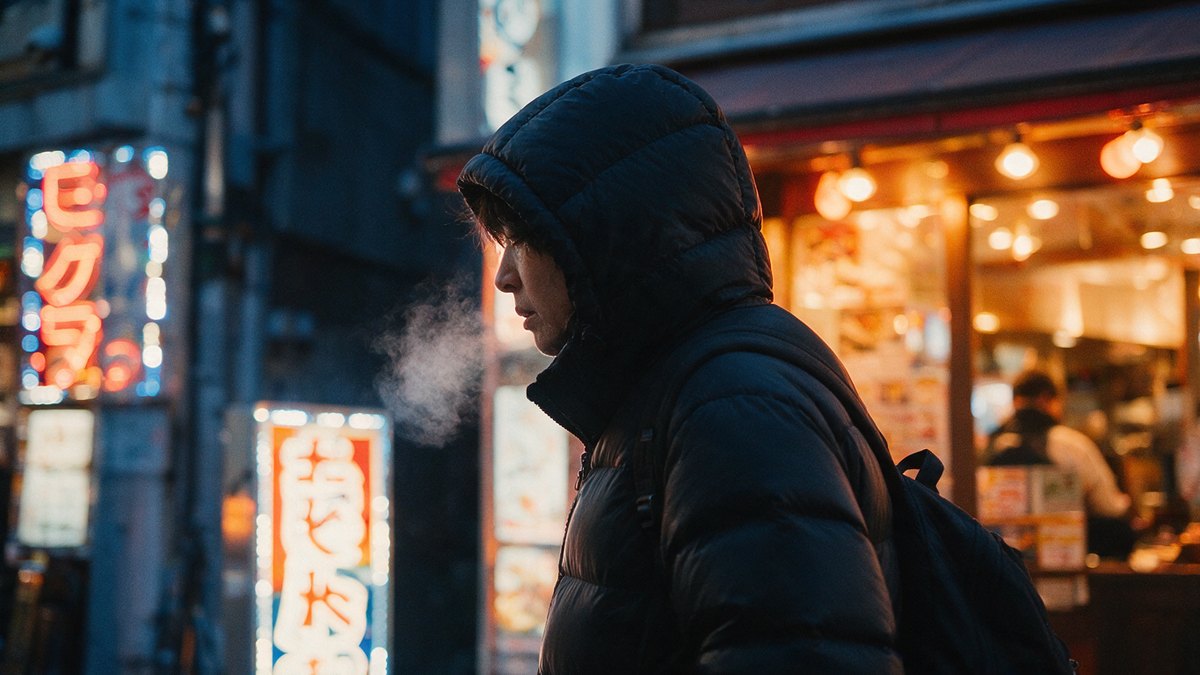
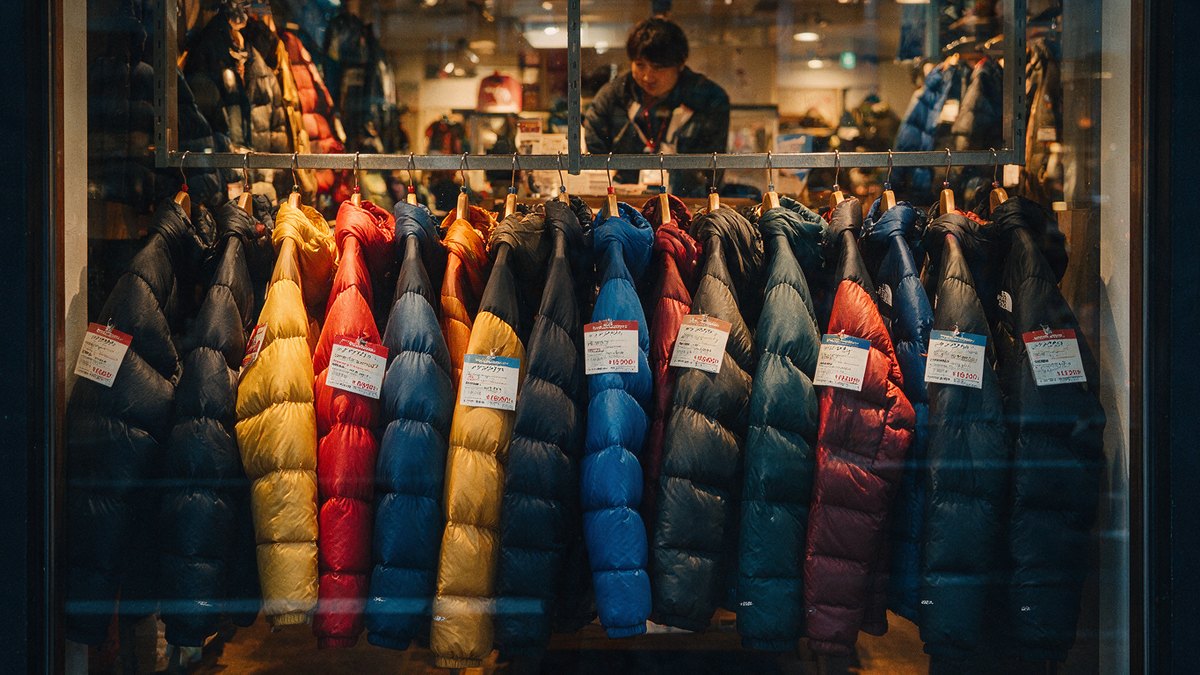
For autumn and a city winter around freezing, a thin layer of down is enough: the Uniqlo Ultra Light Down costs ¥7,990, a TAION down vest starts at ¥5,940, and both pack into a pouch and go under a coat. For a winter with real cold in it, take something denser: the Uniqlo Seamless Down Parka at ¥12,900, the Montbell Superior Down at ¥19,500, or the Nanga Aurora Tex at ¥49,500, which shrugs off rain and wet snow. For hard frost with wind, the Montbell Alpine Down Parka at ¥32,000 or a Descente Mizusawa Down, where the cheapest model is ¥99,000. Under any of these goes Japanese thermal underwear: Heattech at ¥1,290, 極暖 at ¥2,490, 超極暖 at ¥2,990.
The down jacket began with a story from Manchuria
Eddie Bauer nearly froze to death fishing on the Olympic Peninsula in winter: his wet wool shirt set into a shell of ice while he hauled a sack of fish uphill. He knew what to do from stories told at home — his uncle had served in the Russian army in Manchuria during the Russo-Japanese War and described how the soldiers got through it in coats stuffed with down. Bauer filled a jacket with goose down and patented a diamond quilting pattern so it wouldn't slide into a heap at the bottom. That was the Skyliner, in 1936.
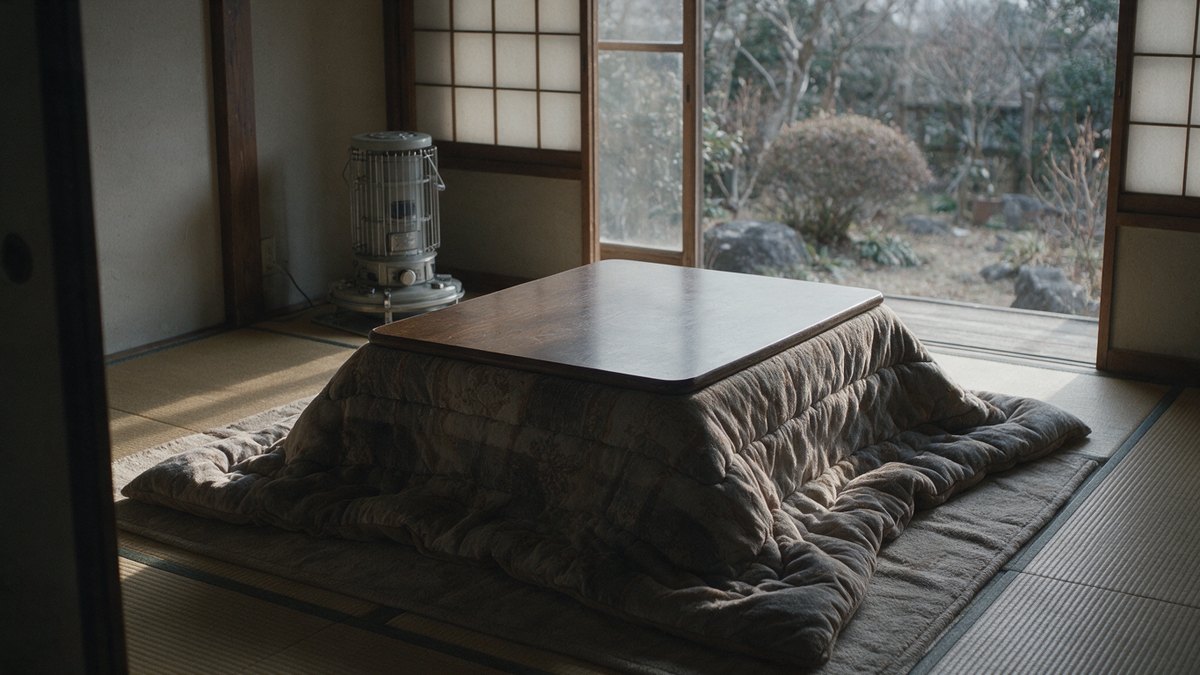
Japan only took to down in the second half of the 1970s, and it stopped being mountain gear almost at once. The reason is a domestic one: there is no central heating here, and homes are warmed a room at a time. The average living room in winter, with the family at home, sits at 17.1°C, the bedroom at 12.8°C, and only 18% of houses meet the insulation standard. The kotatsu, a low table with a quilt and a heater underneath, is leaving daily life: 64% of households had one in 2002, a quarter have one now. A Japanese person dresses not for the street but for the whole day, their own kitchen included. Hence thermal underwear as the base of the wardrobe, and a down jacket that has been a city garment here from the beginning.
How to read a Japanese down jacket
Japanese labels don't give you a temperature. Neither Uniqlo nor Montbell nor Descente promises anything like "good to −15": warmth depends on what you have on underneath, on whether you're walking or standing at a bus stop, and on the wind. So what follows is sorted by the job the jacket has to do, not by a spec sheet.
Autumn and winter around freezing
The piece that matters here is Uniqlo's Ultra Light Down at ¥7,990: 90% down and 10% feather at 750 fill power, in a NANODESIGN fabric developed with Toray. Uniqlo says plainly that the water-repellent finish doesn't last forever and that the jacket can only be washed by hand.
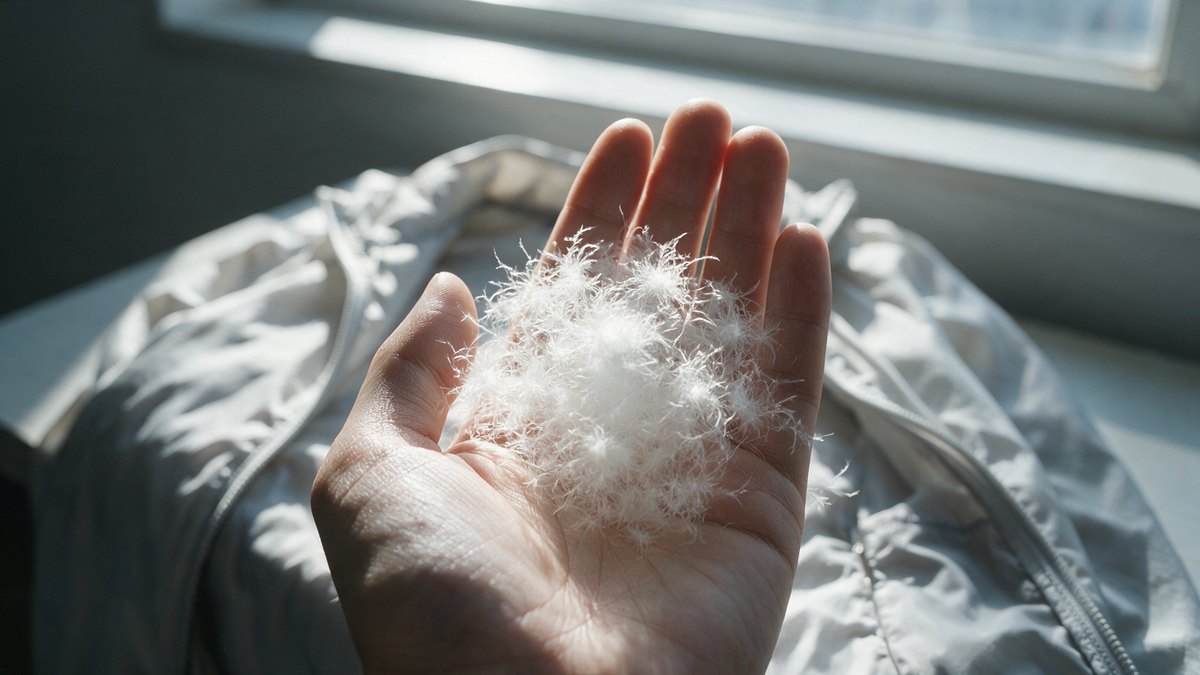
Fill power is simple enough to get straight. It's the volume in cubic inches that an ounce of down takes up under a standard weight: the higher the number, the more air the same gram of down holds, and what keeps you warm is the still air trapped inside it. Montbell puts numbers on it — at the same weight, their 800 down is about thirty percent warmer than ordinary 550, and 1000 is about eighty percent warmer.
A thin down layer worn under a coat is called an "inner down" in Japan, and one brand does nothing else: TAION runs from ¥5,940 for a vest to ¥19,800 for a high-neck jacket. MUJI has packable 750 down: ¥4,990 for the vest, ¥6,990 for the jacket. Montbell goes after low weight: the Superior Down Jacket is 190 grams with 800 down at ¥19,500, and the Plasma 1000 is 130 grams, lighter than a half-litre bottle of water, at ¥27,940.
Down dislikes damp, and Uniqlo has a synthetic for that case: PUFFTECH, ¥4,990 for a vest, ¥7,990 for a parka. The fibres in the fill are hollow, some of them about five times thinner than a human hair, and the brand promises warmth above 90% humidity and faster drying than down.
When it actually gets cold
An ordinary down jacket is quilted right through, so there is no down along the seams and you get cold stripes. There are two ways around that: sew a baffle between the layers so the chamber keeps its depth, or put the needle away and bond the sections instead.
Uniqlo sells the second route as Seamless Down: the men's parka is ¥12,900 with 750 down, the women's ¥14,900 with 700. The product page carries a caveat few people read — the shoulders, sides, sleeve joins, pockets, hood and collar are still stitched, and only the body of the jacket is bonded. Next to it sits the Hybrid Down Parka at ¥14,900, with down across the upper body and synthetic fill in the hem, the sides and the sleeves, where a jacket gets wet and rubs.
That division isn't arbitrary. Wet down doesn't insulate at all: water pushes the air out of the clusters and carries heat away far better than air does, and soaked clusters mat together. A water-repellent finish dries the garment about a third faster, but it holds for roughly fifteen washes and doesn't make down invulnerable.
So the down goes under a membrane. The Nanga Aurora Tex Down Jacket at ¥49,500 holds 20,000 mm of water column and lets 6,000 grams of vapour per square metre out in a day, with 150 grams of Spanish white duck down at 760 inside, washed in Japan. Nanga's down goes up in steps: Spanish duck at 760, Polish white goose at 860, Hungarian grey at 930. Goose is loftier than duck as a rule, being a bigger bird from a colder climate. In the same bracket sit the Snow Peak Everyday Down at ¥44,000 with 700 down and the compact Mizuno Breath Thermo at ¥15,400 with an honest 650.
Hard frost and wind
This is where clothing turns into equipment. The Montbell Alpine Down Parka at ¥32,000 uses box construction, where no thread passes through the shell and there are no cold stripes at all: the hood goes over a helmet, the cut allows for a climbing harness, and the whole thing weighs 455 grams. The Permafrost from the same line, ¥31,900, comes with a membrane, which makes it a down jacket for wet snow.
A big number on the label is easy to misread. Fill power says nothing about how warm the jacket will be: warmth comes from the mass of down, not its loft, and thirty grams of 900 down is colder than a hundred grams of 450. What you buy with a high number is warmth without the weight and the bulk.
The top of the Snow Peak range is the GORE-TEX Weatherproof Down Jacket at ¥143,000: Polish white goose down above 900, taped seams, and a mesh pocket in the back for a kairo hand warmer. At the Japanese The North Face the jacket everyone wants is the Baltro Light, snapped up on pre-order back in autumn: in September the flagship store had nothing from the whole Baltro family except the kids' version at ¥48,400. Among the adult models you can find, say, the Aconcagua Hoodie at ¥41,800 — 450 grams, a city jacket rather than a cold-weather one.
The Descente Mizusawa Down belongs here as well, from ¥99,000 up. Those jackets stand apart because they aren't made the way any of the others are, and they get a section of their own below.
Layers instead of one thick coat
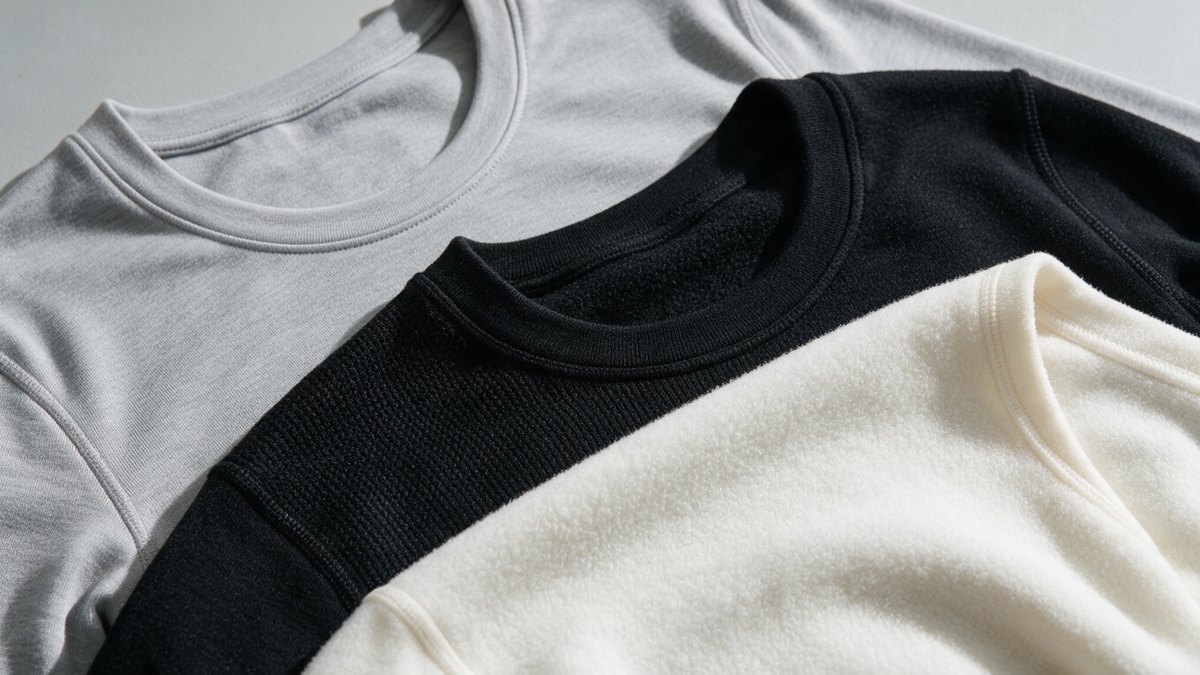
The Japanese way of dressing for cold doesn't rest on the thickness of the jacket but on three thin layers, and the bottom one has grown into an industry here. Heattech came out in 2003, developed with Toray, and by 2023 around 1.5 billion pieces had been sold.
It doesn't work the way wool does. Skin gives off moisture all the time, the moisture becomes vapour, the rayon in the fabric absorbs it, and the energy of the moving water molecules turns into heat — in Japanese that is 吸湿発熱, "heat from absorbing moisture". Mizuno's Breath Thermo runs on the same principle, taken from sheep's wool.
There are three weights. Plain Heattech is ¥1,290. 極暖, "extra warm", is ¥2,490, and Uniqlo describes it as roughly one and a half times warmer than the standard. 超極暖, "ultra warm", is ¥2,990 and roughly 2.25 times warmer. The brand counts in CLO, the unit of a garment's thermal resistance, rather than in degrees; nowhere does Uniqlo say anything is "a degree warmer", and Mizuno doesn't promise degrees either.
The composition explains the difference better than the marketing does. 超極暖 has the most rayon, 23%, and rayon is the fibre that produces the heat. The cotton version of 極暖 has no rayon at all; what it puts against the skin is Supima cotton, which makes it a piece for people who find synthetics scratchy rather than the warmest thing in the range. For anyone who can't wear synthetics at all, MUJI has あったか綿, "warm cotton" — underwear in 100% cotton with a soft brushed face. The same layer is sold in small pieces too: Heattech socks ¥590, a hat ¥1,500, scarf and gloves at ¥1,990 each, warm leggings ¥3,990.
What you can only buy in Japan
The best-known case is The North Face. Goldwin brought it into Japan from 1978 and bought the trademark rights for Japan and Korea in 1995. Since then the Japanese The North Face has legally been a separate brand: 98% of what hangs in a Tokyo store is designed by Goldwin itself, and the licence doesn't allow it to sell beyond those two countries. Those models are missing from a European shop not because nobody shipped them, but because the rights there belong to a different company. The fill is Japanese too: 光電子, ceramic microparticles in the fibre that re-radiate body heat.
The North Face Purple Label isn't made by Goldwin at all but by nanamica, and for Japan only: the Field Down Cape is ¥36,300, the corduroy down jacket ¥69,300, the GORE-TEX coat ¥107,800.
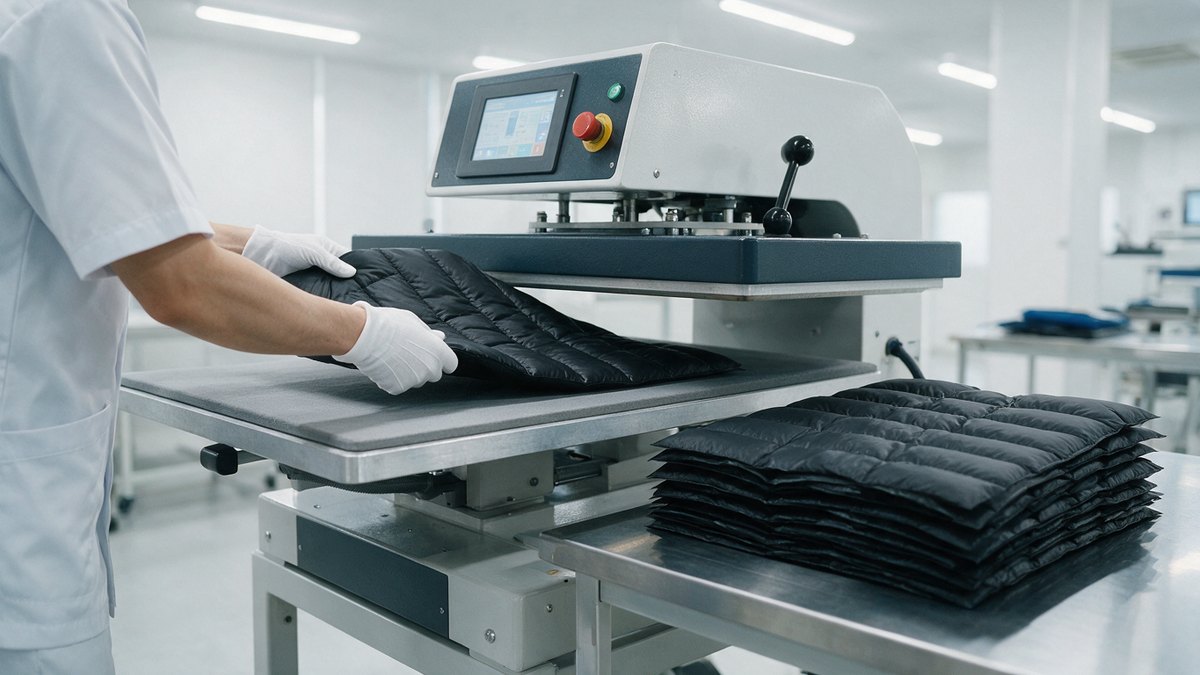
Descente's Mizusawa Down isn't sewn but welded: shell, down and lining are stacked in three layers and joined under a heat press, so there are no needle holes and nowhere for water to seep in. All of it is made at the company's own factory in the Mizusawa district of Oshu, in Iwate Prefecture, which used to turn out baseball uniforms and ski suits and was rebuilt from the ground up in 2025 for three billion yen. A single jacket goes through more than 280 operations, twice as many as an ordinary down jacket, and holds 20,000 mm of water while letting 10,000 grams of vapour out. The Mountaineer is ¥154,000 and weighs a kilogram; the most affordable model is ¥99,000 and the dearest ¥220,000. It all started with the kit for the Japanese team at the Vancouver Olympics, and these days Descente sets up fitting rooms in a freezer at minus twenty-five.
Montbell is the odd one out in this company: 800 fill power for ¥19,500 where the others ask three times as much. It was founded in 1975 by Isamu Tatsuno, a climber who in 1969 became the second Japanese to take the north face of the Eiger. He started making his own gear after frostbiting his hands in bad gloves, and he keeps prices down by working with factories directly, with no trading houses in between: "I want to be a brand a student can pick off the shelf without a second thought."
Nanga sews down jackets and sleeping bags in the town of Maibara at the foot of Mount Ibuki, in a factory founded in 1941 to make kotatsu quilts. The brand itself was born in 1994 and took its name from Nanga Parbat in the Himalaya, the killer mountain. Its lifetime guarantee gets retold more generously than it reads: Nanga will take its own sleeping bags in for repair with no time limit and will repair any down jacket, but repairs are paid for by default, and the owner covers shipping to the factory.
Snow Peak grew in 1958 out of a hardware shop in Tsubame-Sanjo, the capital of Japanese metalworking, and it has a problem of its own to solve. The FR 2L Down Jacket at ¥69,300 is cut from a fabric with aramid fibre — Kevlar — in it, and the brand promises the fabric won't burn: you can sit by a fire in it without watching for sparks. Inside is 800 down, and the jacket washes at home.
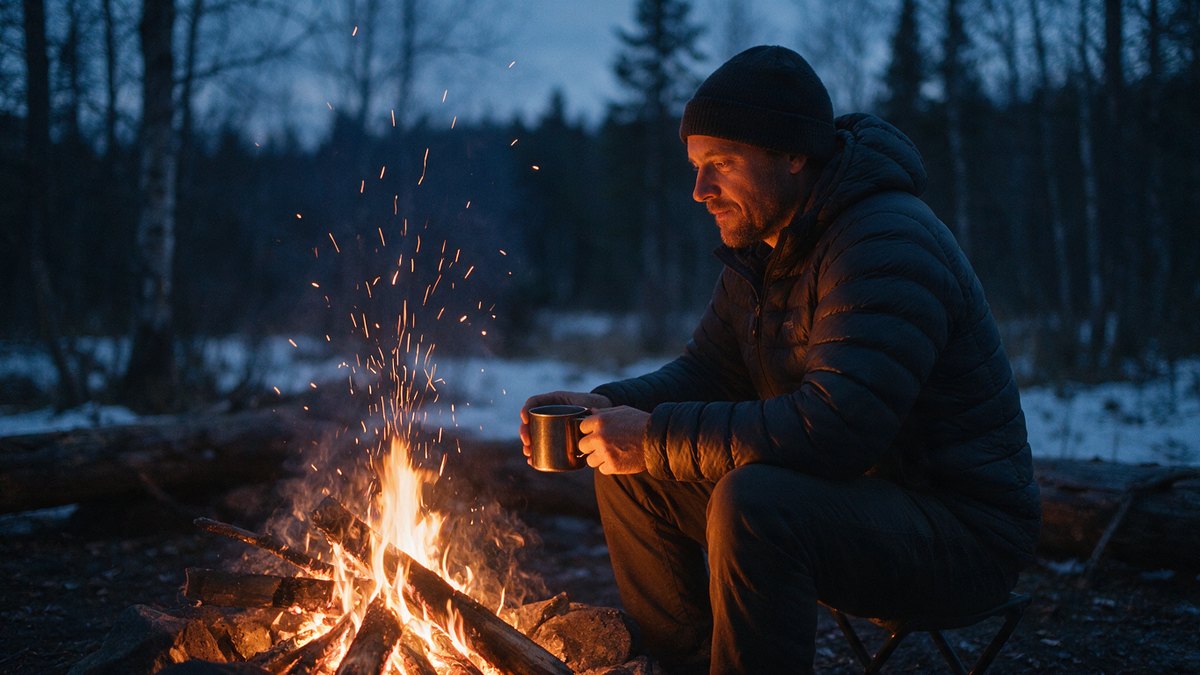
Campfires burn holes in more than Snow Peak's jackets, and the neighbours have answers of their own. Nanga has the HINOC line in an aramid and polyester blend, and the brand states itself that the material is spark-resistant rather than fireproof. Workman, a workwear chain with eight hundred stores, came at the same problem from another side: its FLAME-TECH fabric is coated with a heat-resistant resin so that it won't melt and a spark won't eat through it. This season's down range opens at ¥9,800 for the XShelter coat. What's inside a Workman jacket isn't pure down but Fusion Down, a blend of down and a synthetic that warms from moisture; the jacket washes at home; Workman doesn't state a fill power, and these aren't jackets to hold up against an 800 piece.
What changed at Uniqlo and GU this autumn
Anyone who last bought an Ultra Light Down a few years ago will come back for the familiar thing and not find it. The down vest has gone from the range altogether, and the Ultra Light Down name now covers exactly one garment, the jacket. The vest's place went to the synthetic PUFFTECH Compact Vest at ¥4,990, and Uniqlo moved the money into its seamless models, which now outnumber the ultralight ones.
GU, the younger label from the same company, has no down jackets at all. Everything warm in its outerwear is filled with 100% polyester and runs from ¥3,990 to ¥9,990. There is no Heattech equivalent either: there's a "warm" line, but nothing about a heat-generating fibre.
Sizing and care
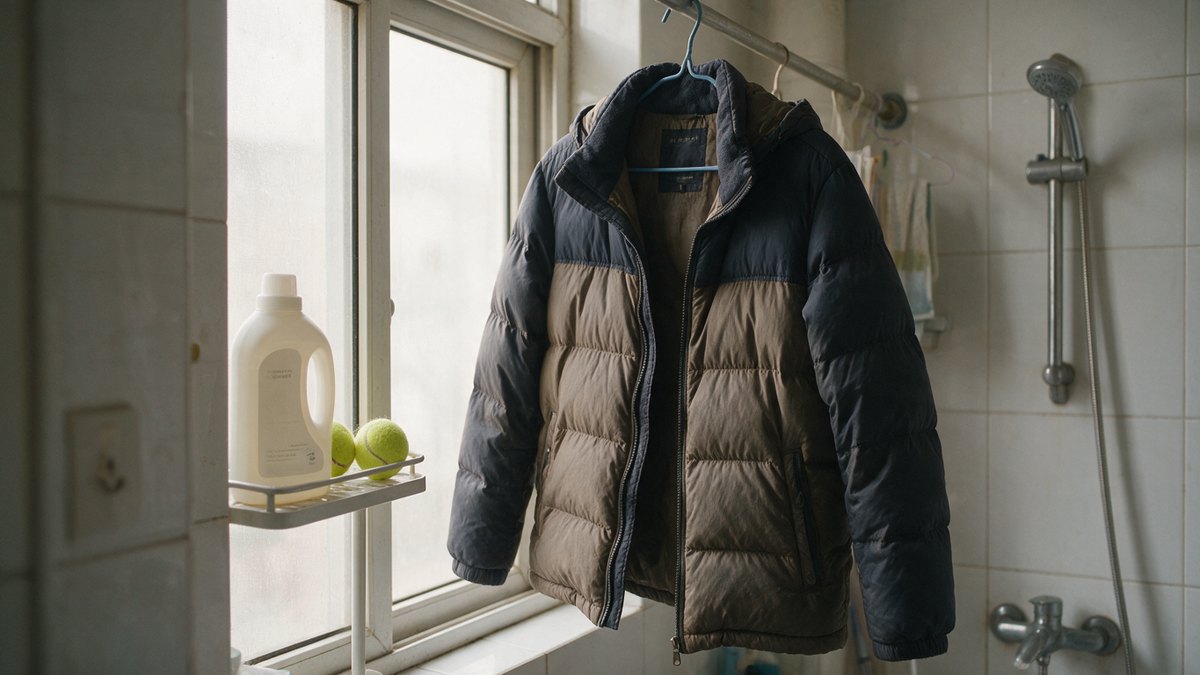
Japanese sizing goes by height rather than by a letter on the tag: Montbell cuts its M for 165–175 cm and its L for 170–180. At 182 cm a Japanese L will be short in the sleeve and at the hem even if it fits across the chest, and a down jacket goes over a sweater, so you want room in any case. The numbers on a product page are measurements of the garment itself, not of the person wearing it, which is why they never match the sizes you know — lay them against a jacket you already own. Wash a down jacket with a neutral detergent, since alkaline powder breaks down the protein in the down, tumble-dry it on low while breaking up the clumps by hand, and store it loose on a hanger, not compressed and not in a plastic cover.
FAQ
How is the Ultra Light Down different from an ordinary down jacket? In the amount of down and in what it's for. It's a thin layer at 750 fill power that packs into a pouch, meant for the shoulder seasons or for wearing under a coat. A winter down jacket is packed denser, gets a heavier shell and a hood, and won't go into a pouch at all.
How do I work out my size? Japanese sizes go by height: Montbell's M is for 165–175 cm. The figures on a product page are measurements of the garment, not of the body, so they won't match the sizes you're used to — compare them with something you already wear.
Which is warmer, 極暖 or 超極暖? 超極暖. Uniqlo calls 極暖 roughly one and a half times warmer than plain Heattech and 超極暖 roughly 2.25 times, counted in CLO, the unit of a garment's thermal resistance, not in degrees. The composition says the same: 超極暖 has the most rayon, the fibre that turns moisture into heat.
Can a down jacket be washed at home? It can, with a neutral detergent on a gentle cycle: alkaline powder breaks down the protein in the down. It has to go into a tumble dryer on low afterwards, or the down will clump. Snow Peak jackets and Workman's Fusion Down ones are made for home washing, while the Uniqlo Ultra Light Down is hand-wash only.
Why can't these models be found outside Japan? For some of them it comes down to licensing. The North Face trademark in Japan and Korea belongs to Goldwin, which designs its own range and under the agreement can't sell it in other countries; Purple Label is made by a third company, nanamica, and again for Japan alone. Montbell, Nanga, Descente, Snow Peak and Workman are domestic brands, and their ranges are sold inside Japan.
Down or synthetic? Down wins on warmth per gram, which is the whole point of something like Montbell's 190-gram jacket at 800 fill power. Synthetic wins on damp, on price and on upkeep: it works wet, dries faster and suits anyone allergic to down. Uniqlo has moved part of its light range onto PUFFTECH synthetic and dropped the down vest from the line-up completely.
How to order a down jacket from Japan
Searching in Japanese gets you further: ダウンジャケット means "down jacket", and a brand name in katakana will open its official store on the marketplace. New models and brand-run shops live on Rakuten — Descente and Montbell both sell their own goods there.
Add the jacket to your cart in our catalogue and pay on the site. After that we buy it, receive it at our warehouse in Japan, check it over and send it on to you. Our fee for the whole service is 10% of the item price, with a minimum of ¥1,000.
Update history
- 2026-09-14 — article published.