

Checked: 2026-11-16 · Author: Maketto Team

In Tokushima Prefecture, indigo is still made the way it was in the Edo period. The leaves soak in water for several days, then lime and lye go in, and a thick dark-blue sediment settles at the bottom. A tonne of fresh leaves yields just 2 to 4 kilograms of it. The dye is called awa-ai (阿波藍), and almost all of Japan's natural indigo comes from here.
In May 2026 Casio released the Oceanus OCW-T2600AP, limited to 800 pieces. It's a titanium chronograph with three mother-of-pearl subdials, each tinted with awa-ai in its own shade of blue, from the pale blue of water near the shore to the deep blue of the sea at the horizon. Japanese retailers list it as a Japan-only limited edition. Casio's price is ¥154,000, shops in Japan sell it for a little less, and outside Japan you won't find it in stores. That's normal for Japanese watches: the brands often keep their best models at home.
The short answer
Japan gets entire collections made for its own market: Oceanus and Lineage from Casio, Attesa and The Citizen from Citizen, and Japan-coded models across Seiko's Presage, Prospex and Astron. Some of them trickle out abroad, but the full range, the limited editions and the Japanese prices are only in Japan. There are several reasons. Japanese buyers want different watches from European and American ones, the brands keep pricing and service inside their own networks, and small runs and anniversary pieces are easiest to sell at home.
Solar charging works anywhere. Radio time sync depends on where you live: the watches pick up time signals from the US, Germany, the UK, Japan and China, and each station only reaches so far. Bluetooth models take the time from your phone, and GPS models from satellites anywhere on Earth. A Japanese-market Casio gives itself away with JF at the end of the model number; for Seiko, look for the model number on the brand's Japanese site.
How Japanese watches caught up with the Swiss
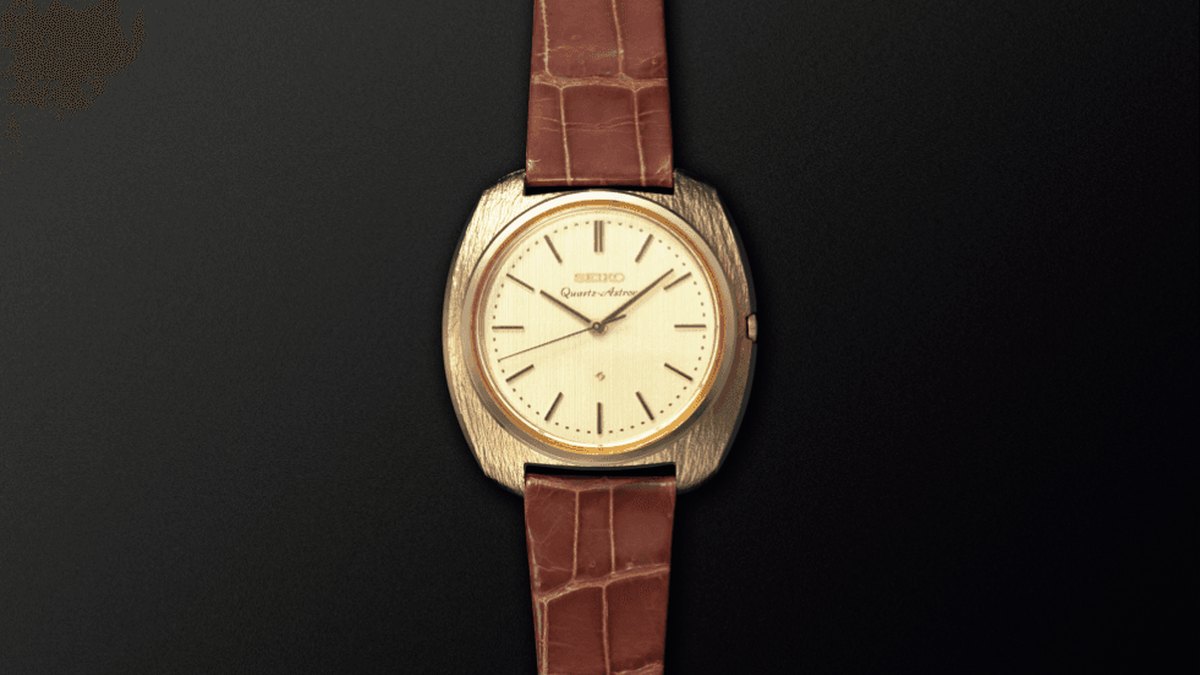
Seiko launched the first Grand Seiko in 1960, and the goal was blunt: a watch to match the world's best for accuracy and quality. The first model was tested in-house to the same standard as Swiss chronometers and sold with a rate certificate.
A few years later the Japanese went to test themselves against the Swiss on their home turf. The Neuchâtel Observatory still ran chronometer competitions then, and in 1964 Seiko's entries finished in the mid-140s and 150s. By 1967 they had taken second and third place in the manufacturers' ranking. At the Geneva competition in 1968, Seiko's mechanical watches took fourth through tenth place. The top three went to Swiss quartz watches.
A year later Seiko put quartz on the wrist itself. On 25 December 1969 the Quartz Astron 35SQ went on sale, the world's first quartz wristwatch. It had an 18-carat gold case and cost ¥450,000, about the price of a popular car at the time. Seiko opened up most of its patents, and competitors in Japan and abroad started building quartz movements on its design. Cheap, accurate quartz turned the world market upside down within a few years, and Swiss factories had a hard time of it. Historians later named the period the quartz crisis.
Citizen, meanwhile, kept doing things nobody had done before. In 1970 came the X-8 Chronometer, the first watch with a titanium case. In 1976, the first analogue quartz watch powered by light. In 1993, the first watch to receive time signals from more than one country: Japan, Germany and the UK. Casio came to watches later, in 1974, with the electronic Casiotron, which the company calls the world's first digital watch with an automatic calendar.
That history is where Japan's trust in its own watches comes from. Japanese buyers know that the titanium case, solar power and quartz all started in their own country, and that Citizen made the first radio watch to work across several countries. So they read Made in Japan as a promise. Japanese watchmakers print it on the dial only when both the movement and the watch are assembled in Japan.
Each brand has its own workshops. Grand Seiko mechanical watches are assembled at Studio Shizukuishi in Iwate Prefecture, a building at the foot of the mountains designed by Kengo Kuma and opened in 2020. Spring Drive and Grand Seiko quartz are made at the Shinshu Watch Studio in Shiojiri, Nagano Prefecture. Casio's main Japanese factory has been running in Higashine, Yamagata Prefecture, since 1979, with a dedicated line for Oceanus and the top G-Shock and Pro Trek models. The Citizen is assembled by hand at Citizen's workshop in Nagano.
Why the best models stay in Japan
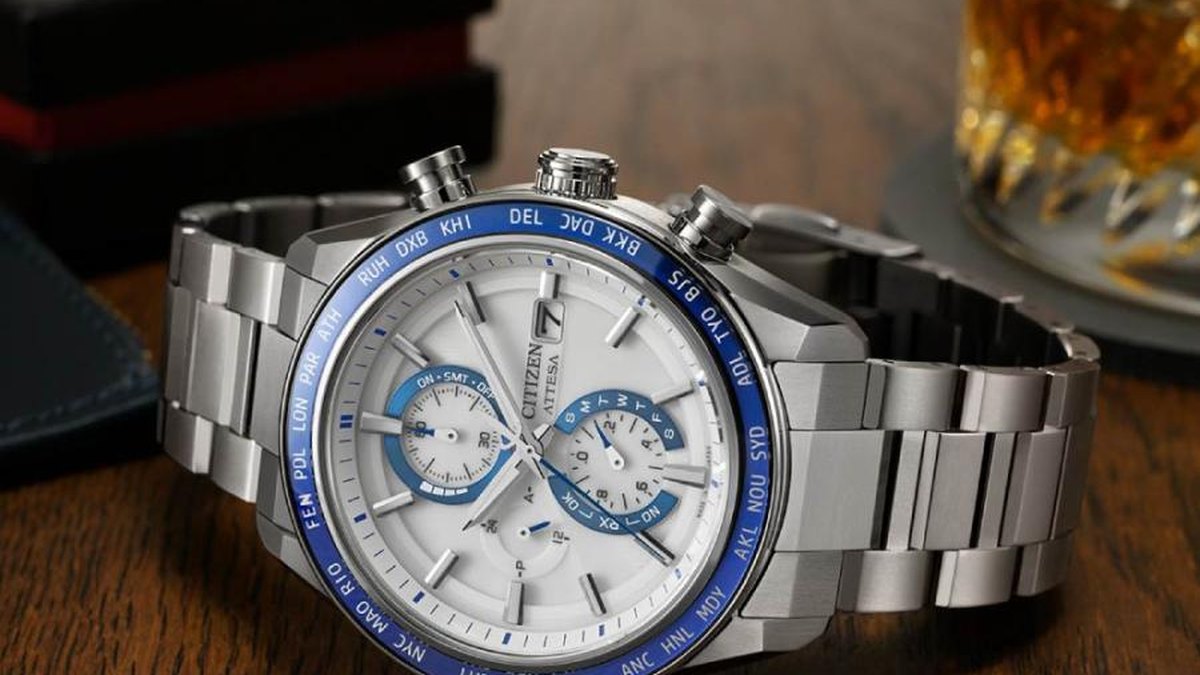
Grand Seiko was sold only in Japan for half a century and reached the world market only in 2010. Akio Naito, president of Seiko Watch, explained why: there simply wasn't enough production capacity, and in American luxury watch stores Seiko was seen as a mid-tier department store brand. The line has moved since then, but the habit of keeping the best at home has stayed with Japanese brands.
Japanese buyers want a different watch. They wear it every day with a business suit, so they value restraint, low weight and a slim case. That's why there's so much titanium: Oceanus, Lineage, Attesa and The Citizen are almost entirely titanium. Europe and America get bigger, brighter watches. Making one model for everyone doesn't pay, so Japanese versions stay Japanese.
Radio watches tell a similar story. A Japanese owner expects the watch to set itself, and in Japan that works almost everywhere. Abroad the same feature is often useless, so some models only receive Japanese stations. Citizen sorts its radio watches this way on its Japanese online store: Japan only; Japan, China, US and Europe; and worldwide.
The brands also keep pricing and service inside their own networks. Seiko makes some models only for its Seiko Global Brand Core Shop boutiques, and our catalog shows what that means: the SARX121, the SBDC197 and the new Astrons cost exactly the same in every Japanese shop as on Seiko's site. Oceanus and Attesa, on the other hand, sell at 10 to 30 % below list. And if you bought a Seiko abroad from an unofficial seller, Seiko in Japan won't repair it under warranty and will send you back to the seller. A brand wants its expensive watches sold and serviced where it answers for them.
Small runs and anniversary pieces are also easiest to sell at home. The indigo Oceanus models came in runs of 800 and 1,300, The Citizen with a Japanese paper dial in a run of 300. In 2026 Seiko released an Astron honouring baseball player Shohei Ohtani, 1,700 pieces for Japan only, and Citizen marked fifty years of solar watches with a limited Attesa. Japanese collectors and tourists snap these up; Seiko itself says much of its sales growth in Japan comes from visitors.
The border isn't a hard one, though. In 2021 Fratello called a Seiko Presage with a porcelain dial a Japan exclusive, and readers found it in Germany under an export reference. Oceanus returned to the US in 2021, Attesa followed in 2025, and Lineage is on Casio's European site. So "Japan only" usually means something else: Japan has more models, more colours and more limited editions, all sold in Japanese shops at Japanese prices.
Casio: Oceanus, Lineage and the metal G-Shock
Oceanus launched in 2004, and Casio calls it the world's first full-metal chronograph with radio sync and solar power. The line's motto is "Elegance, Technology", and its signature colour is blue. Current models usually have Tough Solar charging, reception from six stations (two in Japan, plus the US, UK, Germany and China) and Bluetooth for the phone app. On the 2024 anniversary model a full charge lasts about five months in the dark, or 19 in power-saving mode.
2026 prices from Casio's press releases:
| Model | What it is | Price in Japan |
|---|---|---|
| OCW-T2600AP | titanium, awa-ai indigo dials, 800 pieces | ¥154,000 |
| OCW-S7000AP (Manta) | titanium, sapphire crystal bezel, indigo, 1,300 pieces | ¥264,000 |
| OCW-P3000 (Cachalot) | ceramic bezel with world time zones | ¥220,000–253,000 |
The Cachalot has a neat trick for travellers. Hold down the button at 10 o'clock and the seconds hand points to the city where it's currently midnight. Turn the bezel to that city and you can read the approximate time everywhere else.
Lineage is Casio's entry-level metal line: plain titanium watches for the office. The LCW-M100TSE-1AJF, for example, has a 40 mm titanium case, a titanium bracelet, solar charging and radio sync. It has been on sale since 2018 and costs around ¥20,000 in Japanese shops, roughly the price of a good G-Shock.
MR-G is the metal G-Shock, the top tier of the line. Casio regularly releases it with Japanese motifs: a samurai helmet, the blade of a Japanese sword, hand engraving, a traditional Japanese shade of blue.
Seiko: Presage, Prospex, Astron and Japanese references
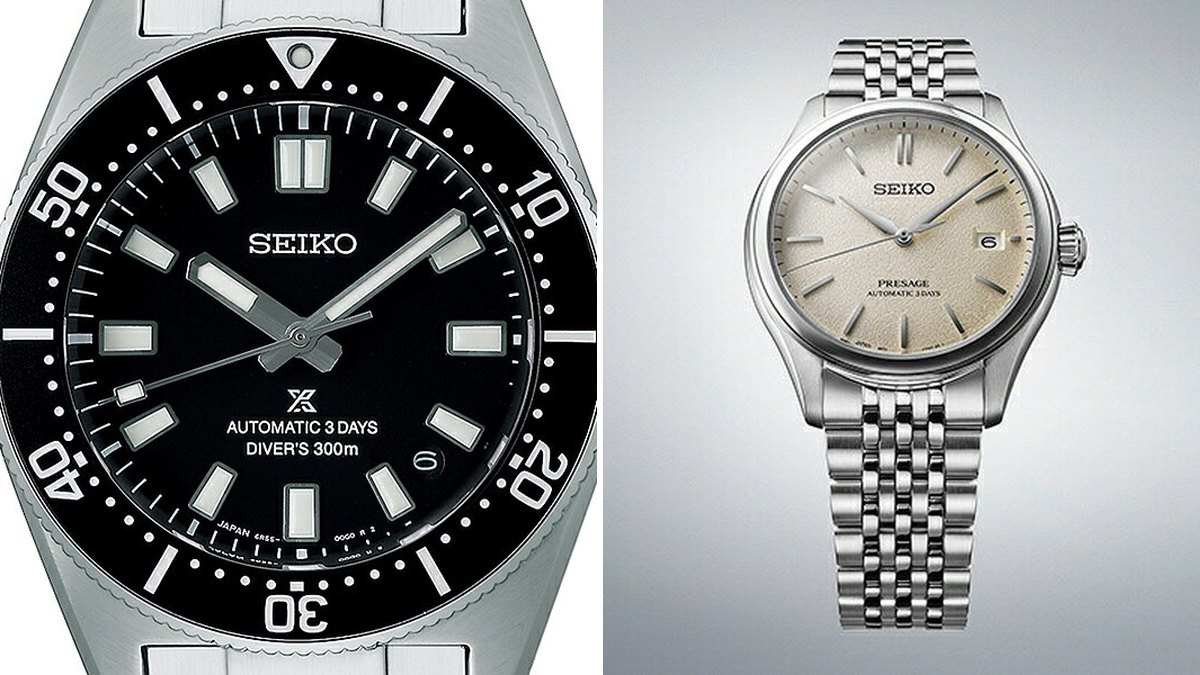
With Seiko, you tell a Japanese model by its reference. For years Japanese versions started with SA or SB, export versions with SPB or SRP. The most famous Japan-market Seikos, the SARB033 and SARB035, were discontinued long ago, and collectors still hunt for them at auction.
A few models from Seiko's Japanese site, all in steel:
| Model | What it is | Price in Japan |
|---|---|---|
| Presage SARY123 | Cocktail Time, 4R35 automatic, 41-hour power reserve | ¥60,500 |
| Presage SARX121 | 6R55 automatic, 72-hour power reserve, sapphire | ¥136,400 |
| Prospex SBDC197 | "1965 Heritage" diver, 300 m, 6R55 | ¥181,500 |
On Seiko's Japanese site the SARX121 and SBDC197 are marked as Core Shop models.
In 2026 Seiko switched to new references starting with H. The first to get one was the Japan-market Lukia HEE002, in March 2026. The second letter marks the collection (B for Prospex, C for Presage, A for Astron), the third the movement family. Seiko's Japanese site writes Presage HCC002J, the international site HCC002J1. Shops will carry both kinds of reference for a long while yet.
Astron is Seiko's technology line, named after that 1969 quartz watch. The GPS Solar models set themselves from satellites "anywhere on Earth", in Seiko's words. The line has radio watches too, like Oceanus: the titanium SBXY033 is ¥137,500 on Seiko's site and less in Japanese shops. The Ohtani Astron is GPS and titanium as well, at ¥440,000.
Citizen: Attesa and The Citizen
Citizen calls Attesa its "titanium brand", and Citizen's titanium goes back to that 1970 X-8. The cases are Super Titanium: titanium with Citizen's Duratect hardening coating, 40 % lighter than stainless steel, with a surface more than five times harder. Citizen's solar charging is called Eco-Drive. Radio models such as the AT8296-53A at ¥198,000 receive stations in Japan, China, Europe and the US. The top models take their time from GPS satellites "anywhere in the world": the CC4084-83Z, made for the fiftieth anniversary of Citizen's solar watches, came in a run of 1,500 at ¥374,000.
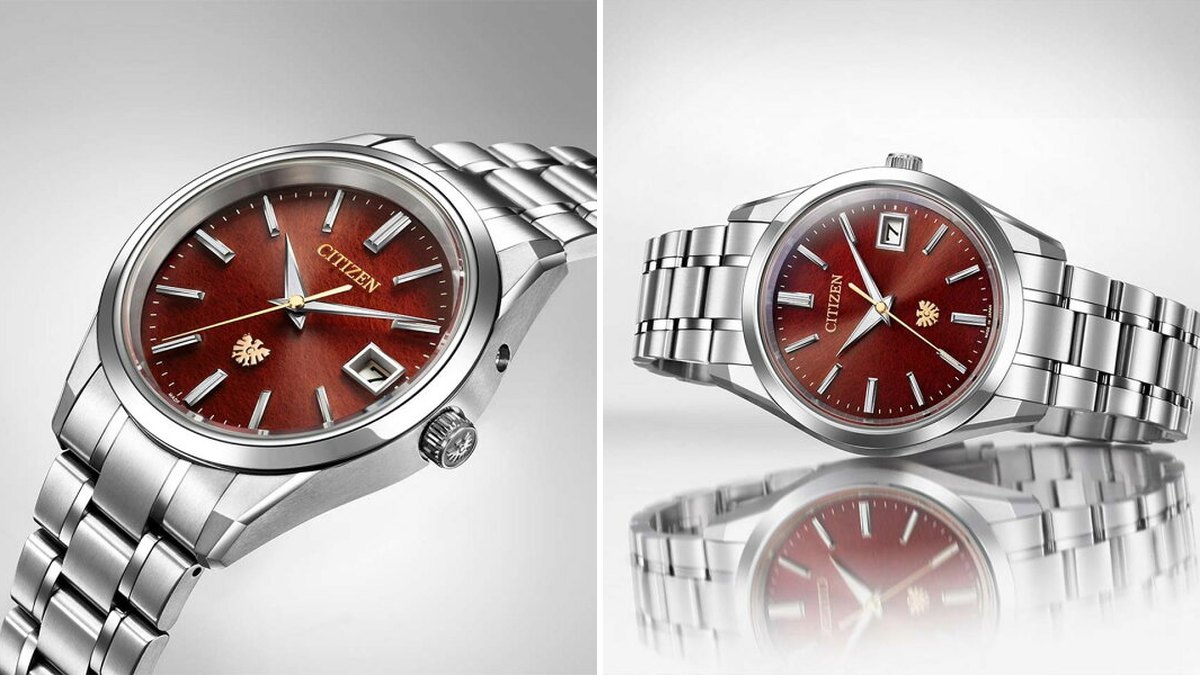
The Citizen has been around since 1995, and accuracy is its whole point. The A060 quartz movement is rated to ±5 seconds a year. For comparison, a radio Attesa that misses its signal runs to ±15 seconds a month. Some models have a dial made of Tosa washi, a Japanese handmade paper. On the AQ4100-65X it's deep red, with a titanium case and bracelet, a run of 300 and a price of ¥440,000.
Will radio sync work where you live
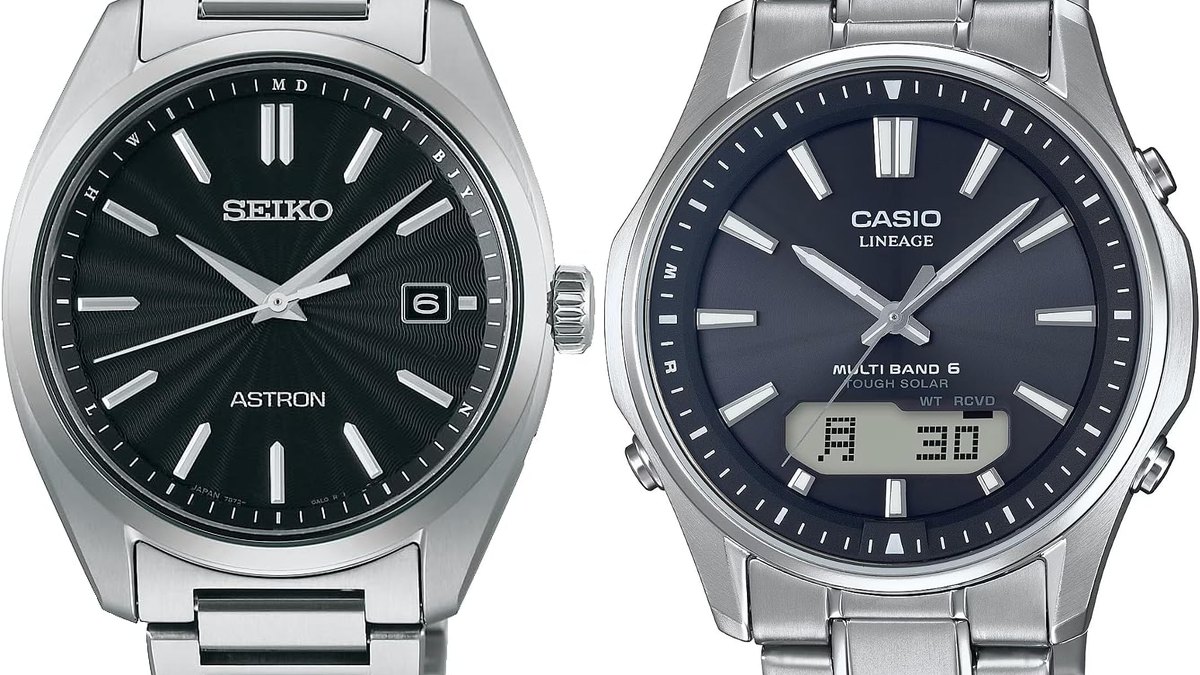
Solar charging doesn't care where you live. It only needs light.
Radio sync is less forgiving. The watch listens for a longwave signal from a national time station, and there are only a handful that Japanese watches understand. Casio's manuals give these ranges:
| Station | Where it transmits | Range per Casio |
|---|---|---|
| WWVB, United States | Fort Collins, Colorado | about 3,000 km |
| DCF77, Germany | Mainflingen, near Frankfurt | about 1,500 km |
| MSF, United Kingdom | Anthorn, Cumbria | about 1,500 km |
| JJY, Japan | Mt Otakadoya (Fukushima) and Mt Hagane (Fukuoka/Saga) | about 1,000 km from each |
| BPC, China | Shangqiu, Henan | about 1,500 km |
Measured from those transmitters, here's how it works out:
- Most of the continental US and southern Canada are covered. New York is about 2,600 km from Fort Collins, Miami and Boston just over 2,800, Toronto and Vancouver closer still. Alaska and Hawaii are out of range.
- In Europe, Germany and the UK together cover the UK, Ireland, France, the Benelux, Scandinavia, Central Europe and Italy down to Rome. Madrid is right on the edge, about 1,450 km from Mainflingen. Lisbon, Athens, Istanbul and Moscow are too far, at roughly 1,800 to 2,000 km.
- In East Asia, the Japanese and Chinese stations cover Japan, Korea, eastern China and Taiwan. Hong Kong is about 1,350 km from Shangqiu, near the limit.
- Australia, Southeast Asia, India, the Middle East, South America and Africa have no station that these watches receive.
Brands differ slightly in which stations they support. Oceanus receives all six; Seiko's radio Astron SBXY033 lists Japan, China, the US, Germany and the UK; Citizen's worldwide radio models take Japan, China, Germany and the US. On a Citizen listing, the stations appear in the spec line for received signal (受信電波 or 電波受信).
A watch that can't hear a station doesn't break. It just runs as ordinary quartz, and now and then you set it by hand. Outside the reception zones, two other technologies keep the time. Bluetooth models connect to your phone four times a day and take the exact time from it. GPS models read satellites anywhere in the world; that means Seiko Astron GPS Solar and the top Citizen Attesa. If you want exact time with zero fuss and live outside the circles, get one of these.
How to spot a Japanese version by its reference
| Brand | Japanese version | Export version |
|---|---|---|
| Casio | ends in JF: LCW-M100TSE-1AJF. Limited editions sometimes end in JR | same reference without JF or with a different suffix: LCW-M100TSE-1A on the European site |
| Seiko, before 2026 | SARX121, SBDC197, SARY123: starts with SA or SB | SPB and SRP |
| Seiko, from 2026 | HCC002J | HCC002J1 |
| Citizen | no regional suffix | same reference |
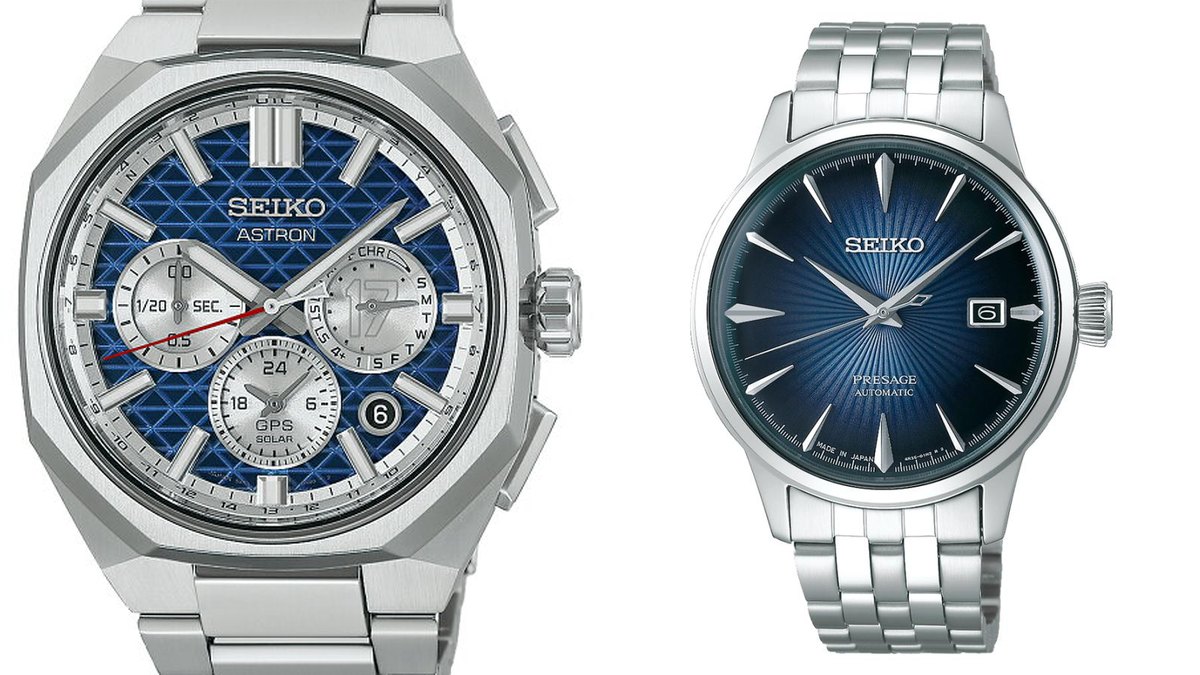
With Citizen you look at the collection rather than the reference: Attesa and The Citizen are made first of all for Japan. Whatever the brand, check what's in the box. A Japanese version comes with a Japanese manual and a Japanese warranty card (保証書). We worked these rules out ourselves by comparing references on brand sites and in shops, so there are exceptions.
New or from an auction: what to look for in a listing
Rakuten, Yahoo Shopping and Amazon Japan carry new watches from Japanese retailers, including limited editions that have already sold out at the brand. Yahoo Auctions and Mercari are where you find used watches and discontinued models, such as the old Seiko SARBs. In the listing description, look for these phrases:
- box and warranty card included (箱・保証書付き);
- spare bracelet links (余りコマ). Without them a bracelet may not close around a larger wrist, and original titanium links are hard to find separately;
- working (稼働品). "Junk" (ジャンク), on the other hand, means sold for parts, with no promises from the seller;
- radio reception checked by the seller (電波受信確認済み).
Look at photos of the caseback and the bracelet clasp: that's where scratches show up first. For a mechanical Seiko, find a photo of the movement through the display back, if it has one. For a solar watch, ask whether it holds a charge: the battery inside ages over time.
FAQ
Will a Japanese watch be all in Japanese? The dial text is usually in English, the manual in Japanese. Bluetooth models are set up through a phone app.
Can I set it to my home time zone? Yes, you pick the time zone in the settings. Oceanus has 27 cities and 38 time zones in the watch itself, and about 300 cities through the phone app.
Are there many fakes of Japanese models? Fewer than Swiss ones, but at auction it's better to buy listings with the box, the warranty card and detailed photos. New watches from Japanese retailers don't have this problem.
How is a Japanese Presage different from the export one? Sometimes only by the reference: the Presage SARX061 was sold in Europe as the SPB091J1. But Japan gets its own colours and limited editions, and some of them never leave the country.
What you can buy through Maketto
New watches from this article that Japanese retailers are selling right now. Prices are as of November 2026; shops often charge less than the brand sites.
- Casio Oceanus OCW-T2600AP-1AJF: titanium chronograph with awa-ai indigo, 800 pieces · ¥138,600
- Casio Oceanus Manta OCW-S7000AP-1AJF: titanium, sapphire bezel, indigo, 1,300 pieces · ¥237,600
- Casio Lineage LCW-M100TSE-1AJF: titanium and radio sync for the price of a G-Shock · ¥20,790
- Seiko Presage SARY123: Cocktail Time, the most affordable mechanical watch here, steel · ¥60,500
- Seiko Presage SARX121: Core Shop model, 72-hour power reserve, steel · ¥136,400
- Seiko Prospex SBDC197: "1965 Heritage" diver, 300 m, steel · ¥181,500
- Seiko Astron SBXY033: pure titanium, radio sync · ¥110,000
- Seiko Astron HAB012J: GPS, titanium, Shohei Ohtani edition, 1,700 pieces for Japan · ¥440,000
- Citizen Attesa AT8296-53A: Super Titanium, radio sync in four regions · ¥138,600
- The Citizen AQ4100-65X: ±5 seconds a year, Tosa washi paper dial, 300 pieces · ¥440,000
Used and discontinued watches, in live search results from auctions and Mercari:
- Oceanus on Yahoo Auctions (オシアナス)
- Seiko SARB033 on Mercari and on Yahoo Auctions
- The Citizen on Yahoo Auctions (ザ・シチズン)
How to order
Japanese watch retailers rarely ship abroad, so buyers outside Japan go through a proxy service. Searching in Japanese works better: Oceanus (オシアナス), Lineage (リニエージ), Attesa (アテッサ), Presage (プレザージュ), or simply the model number. You add a watch to your cart right in our catalog, and for auctions we explain bidding in our Yahoo Auctions guide.
We buy the watch, receive it at our warehouse in Japan, inspect it and ship it to you. Our service fee is 10 % of the item price, minimum ¥1,000. Shipping depends on the parcel's weight and your city: the delivery calculator gives an estimate, and we tell you the exact cost once the parcel is packed and weighed.
Update history
- 2026-11-16 — article published.